Classic Illustrated Books Modern Art and Design Books Translations of Western Texts Japanese Literature Prints and Ephemera Western Books Photo Books Paintings & Scrolls Australia & New Zealand Others
Australia New Zealand Antarctica Japan Korea China Other
Edo Period [1603-1853] Bakumatsu Period [1853-1868] Meiji Period [1868-1912] Taishō Period [1912-1926] Shōwa Period [1926-1989]
Share this book on...



![Setsuyoshu [Collection for Practical Use] A foundational work of Japanese lexicography](shop/thumbnailsM/664.jpg "Setsuyoshu [Collection for Practical Use] A foundational work of Japanese lexicography")


Setsuyoshu [Collection for Practical Use]
| US$16,800.00 |  ENQUIRE ENQUIRE |
 BUY BUY |
Setsuyōshū [Collection for Practical Use]
Ekirin [recorded by].
[Kyōto]: Ekirin, postscript dated Keichō 2 [1597].
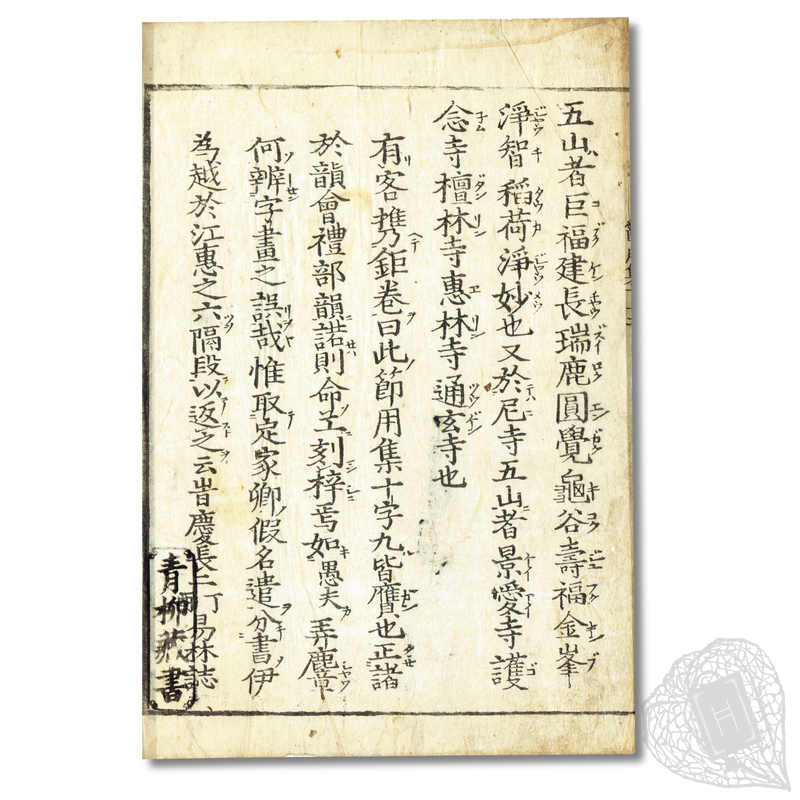
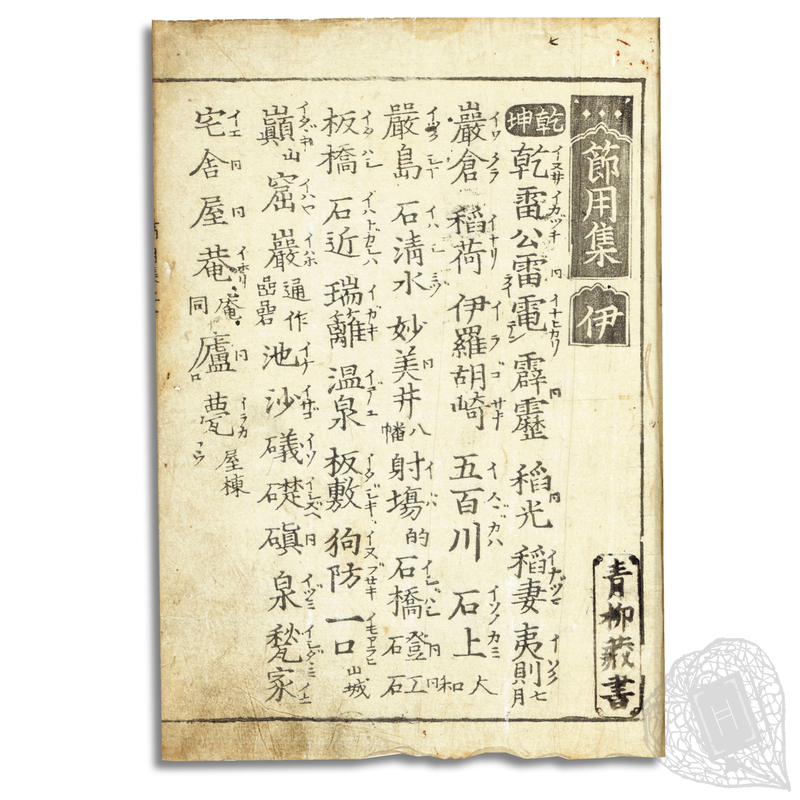
A landmark Japanese dictionary of the late sixteenth century, the Ekirin-bon Setsuyōshū ranks among the most important and influential works in the history of Japanese lexicography. The edition takes its name from the final line of text ("Recorded by Ekirin in the Fire-Rooster year of Keichō 2 [1597]"). First published with this Keichō 2 postscript, it occupies a pivotal place in the development of Japanese dictionaries, bridging the medieval Setsuyōshū tradition and the larger, more sophisticated lexicons of the seventeenth century. Arranged using the traditional iroha (Japanese syllabary) order and semantic categories, it served as an indispensable reference work for scholars, officials, merchants, and educated readers throughout the Edo period, and exerted a lasting influence on the development of later Japanese dictionaries. Modern scholarship recognises several principal forms of the Ekirin-bon, including the Genkoku-bon (original block edition), the Hirai edition, the alternate Hirai edition, and the Koyama edition, distinguished by a complex combination of typographic and textual features. The surviving variants are sufficiently intricate that precise identification of individual copies often requires detailed leaf-by leaf comparison with institutional exemples. The present copy belongs to a recorded variant that preserves the statement of responsibility in the final line of text and was printed without the publisher Hirai Katsuzaemon's statement in relief on the final page. As one of the defining editions of the Setsuyōshū tradition, the Ekirin-bon dictionary remains an essential witness to the development of Japanese lexicography. Despite its importance, examples are comparatively scarce in institutional collections outside Japan.
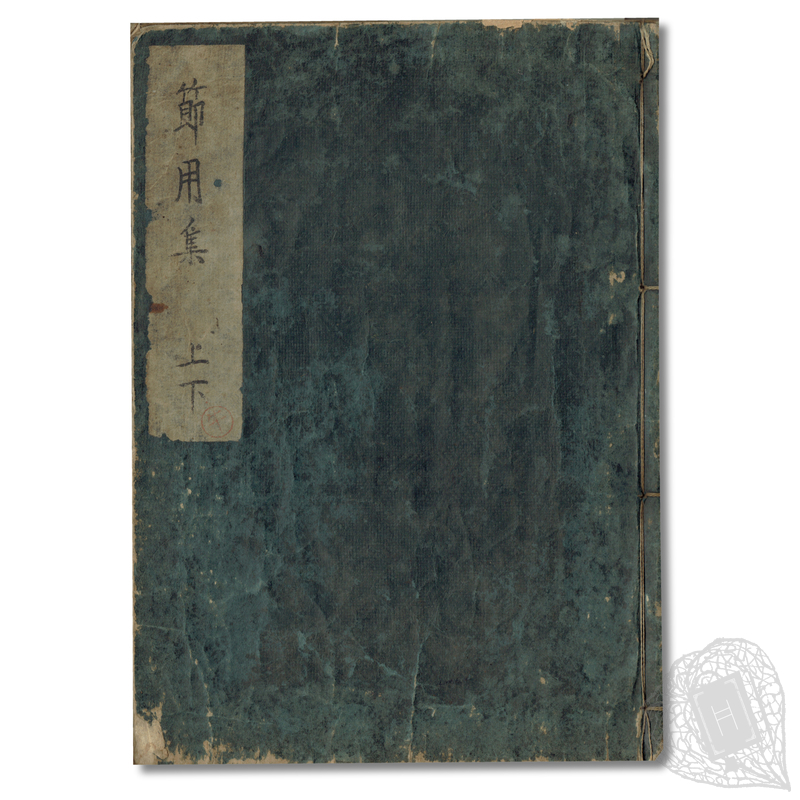
Two volumes bound in one four-hole-bound (yotsumetoji) volume, complete, on double leaves, traditional East Asian binding style (fukurotoji). Presumed non-original wrappers worn, with chips to extremities. Non-original daisen title panel in manuscript, small ex-ownership stamp to foot. Wear and stains to endpapers. Thumbing, small marks, and occasional stains (predominantly to margins) internally. Occasional splits to folded leaf edges. Ex-ownership stamp to first and last pages. 68; 72 leaves. 27.2 x 19.5 cm.
# 260708-1





• Ask a question about this item >
Classic Illustrated Books Modern Art and Design Books Translations of Western Texts Japanese Literature Prints and Ephemera Western Books Photo Books Paintings & Scrolls Australia & New Zealand Others
Australia New Zealand Antarctica Japan Korea China Other
Edo Period [1603-1853] Bakumatsu Period [1853-1868] Meiji Period [1868-1912] Taishō Period [1912-1926] Shōwa Period [1926-1989]
Share this book on...